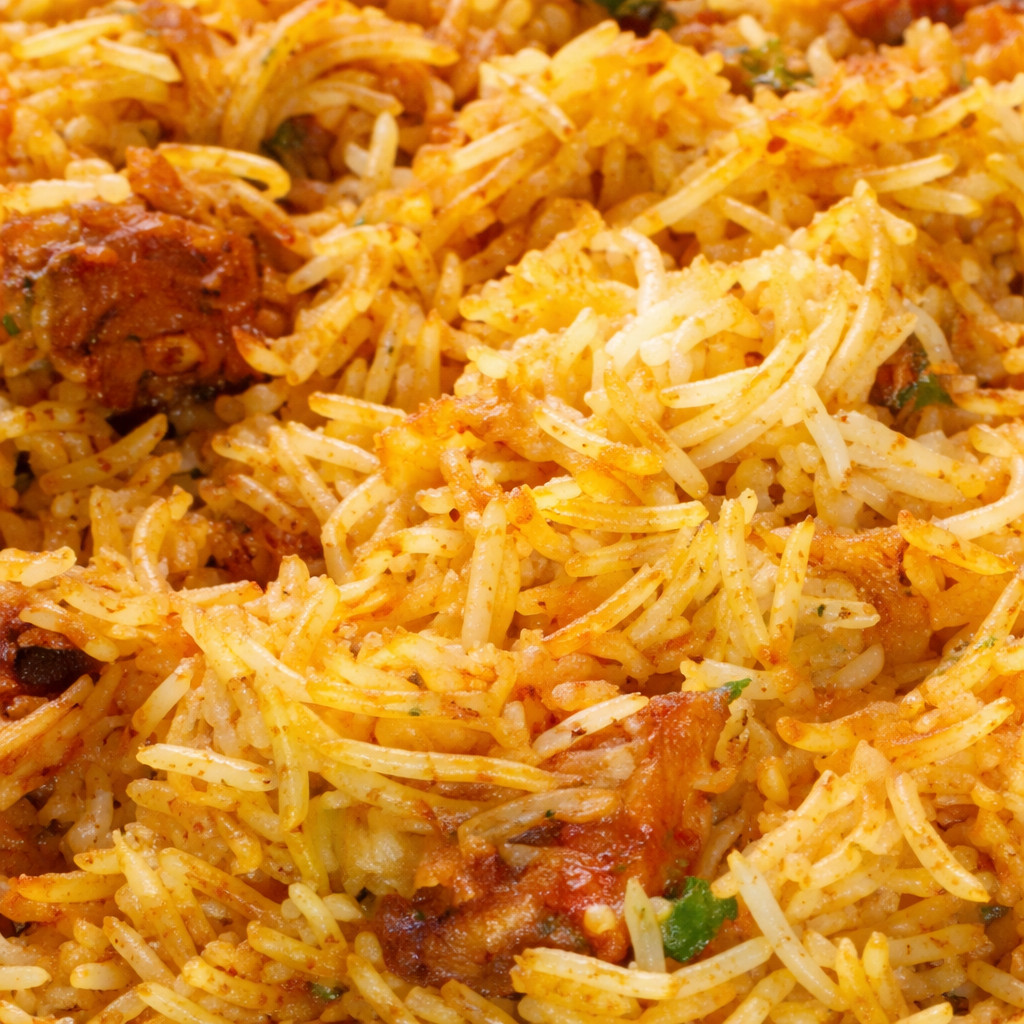

Zutaten
 Hähnchen1 kilogram
 Reis3 cup
 Zwiebel5 pieces
 Tomate5 pieces
 Grüne Chili2 pieces
- Garlic Cloves5 cloves
- Fresh Coriander, finely chopped0.5 cup
 Minze0.3 cup
 Joghurt2 tablespoons
 Zitrone1 piece
 Ghee2 tablespoons
- Grated Ginger2 tablespoons
 Gewürze0
- Salt to taste0
 Curry2 tablespoons
- Red Chili Powder1 teaspoon
- Saffron soaked in five tablespoons of rose water0
Schritte
- 1
In a pot over the heat, boil the chicken once, then drain the water. Place it in another pot with hot water, cinnamon, cardamom, onion, black pepper, bay leaf, cloves, salt, and boil for 30 minutes.
30 MinBenötigte Werkzeuge: Topf
Topf - 2
Chop the onion into cubes, fry in deep oil until golden, drain and set aside. Then slice the tomatoes and set aside. In a bowl, crush the green chili, add garlic and ginger, and mash well to get a paste-like mixture.
10 MinBenötigte Werkzeuge: Bratpfanne🍳Bowl
 - 3
In a pot over the heat, melt the ghee, add garlic, chili, ginger, and stir well. Then add the fried onion and tomatoes, and stir the mixture for 3 minutes.
3 MinBenötigte Werkzeuge:Topf - 4
Add yogurt, 1/4 cup of fresh coriander, curry, chili powder, lemon juice, 1 cup of chicken broth, salt, and chicken to the tomatoes. Let the mixture simmer for 30 minutes on low heat, stirring every 10 minutes.
30 Min - 5
Remove the pot from the heat and add the fresh mint.
1 Min - 6
In a pot of water over the heat, add the rice, two bay leaves, and a lime. Let it boil for 10 minutes, then drain.
10 MinBenötigte Werkzeuge:Topf - 7
In the same pot, add the chicken, half of the sauce, a quarter of the rice, sprinkle with fresh coriander, then add another quarter of the rice, the remaining mixture, and the rest of the rice. Cover the pot and let it simmer very gently for 15 minutes.
15 MinBenötigte Werkzeuge:Topf - 8
Remove the lid, add the saffron mixed with rose water, then replace the lid and let it sit for 15 minutes.
7 Min - 9
Remove the pot from the heat, let it rest for 10 minutes, then serve the biryani on a plate and enjoy hot.
10 Min
Nährwertangaben
Hähnchenpro 100gReispro 100gZwiebelpro 100gTomatepro 100gGrüne Chilipro 100gMinzepro 100gJoghurtpro 100gZitronepro 100gGheepro 100gGewürzepro 100gCurrypro 100g* Die Nährwertangaben sind Richtwerte und die Berechnung kann durch die Art der Zutat sowie durch Anbau-, Lagerungs- und Kochmethoden beeinflusst werden.